
The Long Way Home: Opera Siam’s Thai Buddhist Orfeo

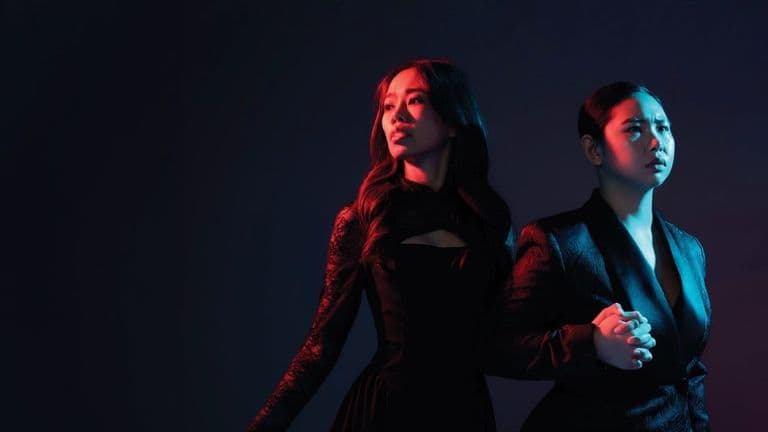
Opera Siam reimagines Gluck’s Orfeo ed Euridice through Thai Buddhist cosmology, blending Western opera with Thailand’s mythological traditions.
Stories of love confronting death appear across cultures, from the Greek myth of Orpheus to traditions throughout Asia and beyond. Opera Siam’s new production of Orfeo ed Euridice draws on that universal theme while reimagining Gluck’s opera through the lens of Thai Buddhist cosmology.
In this interpretation, the underworld Orfeo enters is no longer a shadowy Greek cavern but the hell realms of Thai Buddhist tradition. Those realms are presided over by Yama, the god of death who also appears in South Asian mythology, creating an unexpected connection between cultures separated by geography yet united by similar questions about loss, mortality, and redemption.
A Story Reimagined Through Thai Culture
The concept, developed by director Somtow Sucharitkul, layers the Greek mythology of Gluck’s opera with the visual and philosophical world of Thai Buddhism. Rather than replacing one tradition with another, the production places them in conversation.
The visual language draws heavily from the work of Thai artist Chalermchai Kositpipat, creator of the renowned White Temple, or Wat Rong Khun, in Chiang Rai. Its striking imagery provides inspiration for the opera’s vision of the underworld.
“When I visited the White Temple, I saw a completely different side of his work,” Somtow explains. “The traditional scenes of violence in hell are all done in this monumental white. It’s like seeing it through a completely different lens.”
Each realm of the production is inspired by distinct elements of northern Thai sacred art. The underworld reflects Kositpipat’s famous hellscape imagery, while the Elysian Fields draw inspiration from the Blue Temple, Wat Rong Suea Ten. Orfeo’s journey back to the world of the living incorporates Naga imagery found throughout Thai temple architecture.
One of the production’s most memorable images comes directly from Wat Rong Khun: countless white hands reaching upward from below. In the temple, they symbolize unrestrained desire and suffering. For the opera, the image is reinterpreted to represent both longing and spiritual transcendence, with the same hands transformed into gestures of prayer.
Movement throughout the production also incorporates elements of Thai classical dance, bringing an additional layer of cultural expression to Gluck’s timeless story.
A Bridge Between Two Traditions
For Somtow, the production’s deeper significance lies in the philosophical parallels between the opera and Buddhist thought.
[IMAGE: https://bizweekly.com/wp-content/uploads/2026/06/download-1-18.jpg]
Gluck’s version of the myth famously departs from the original Greek tragedy by offering Orfeo and Euridice redemption rather than permanent loss. That sense of hope resonates with Thai Buddhist beliefs about continuity beyond death.
“Thai people generally believe that life continues, in different shapes, from life to life,” Somtow says. “So I want to create a bridge between these two cultures. What I would like the audience to go back with is a sense of redemption, and a sense that we do, in some way, have power even over death itself.”
By bringing these traditions together, the production explores themes that remain deeply human regardless of culture or era: grief, devotion, hope, and the desire to reunite with those we have lost.
Music That Speaks Across Cultures
First performed in Vienna in 1762, Orfeo ed Euridice is widely regarded as one of opera’s most influential works. Gluck stripped away much of the ornamentation that dominated earlier operatic styles, creating music that focused on emotional honesty and dramatic clarity.
The result is a score that remains remarkably direct. Rather than showcasing technical virtuosity for its own sake, the music places human feeling at the center of the experience.
Conductor Trisdee na Patalung believes this simplicity is one of the work’s greatest strengths.
“The simplicity, the directness, the refusal to ornament for its own sake,” he says. “That’s not a philosophy I need to translate. It speaks for itself.”
That emotional accessibility helps make the opera’s themes universal. Whether viewed through a European or Southeast Asian lens, the story remains one of love, loss, and the hope that grief can be transformed into something enduring.
The Artists Bringing The Vision To Life
The production features performers from Opera Siam’s Young Soloist Program, an initiative dedicated to developing the next generation of Thai operatic talent.
In the title role of Orfeo is Kridhima Siriwattanakamol, recognized by the Bangkok Post as one of Thailand’s leading mezzo-sopranos. Her expressive vocal style and extensive experience with Opera Siam make her a natural choice to lead the production.
[IMAGE: https://bizweekly.com/wp-content/uploads/2026/06/download-11.jpeg]
Euridice is performed by Chanya Maneewan, whose training at Chulalongkorn University and international choral experience have established her as a rising presence on the Thai classical music scene.
The role of Amore is sung by fourteen-year-old Punnika Mahuemuang, already recognized for award-winning performances in competitions across Asia, Europe, and the United States. Her appearance highlights Opera Siam’s commitment to nurturing young performers and providing them with opportunities on the professional stage.
One Evening, One Bridge
Opera Siam’s Orfeo ed Euridice offers audiences an opportunity to experience a familiar story through a distinctly Thai artistic lens. By combining Gluck’s celebrated score with the imagery, philosophy, and symbolism of Thai Buddhist cosmology, the production creates a dialogue between cultures while remaining rooted in the universal themes that have made the story endure for centuries.
Directed by Somtow Sucharitkul and conducted by Trisdee na Patalung, performances take place at The Great Hall, King’s Bangkok, on June 27 and 28.
Additional information about Opera Siam’s productions and educational programs is available at Opera Siam, while readers can learn more about the artistic work of Somtow Sucharitkul at Somtow Sucharitkul.
Tickets are available through Opera Siam’s ticketing partner Ticketmelon at ticketmelon.com/operasiam/orfeo. For questions and enquiries, contact contact@operasiam.com.

Musicians Today Contributor
This article features partner, contributor, or branded content from a third party. Members of the Musicians Today editorial staff were not involved in the creation of this content. All views and opinions are those of the contributor alone.