


The producer whose classical roots reach back to Rachmaninoff on why value, not talent alone, builds careers.
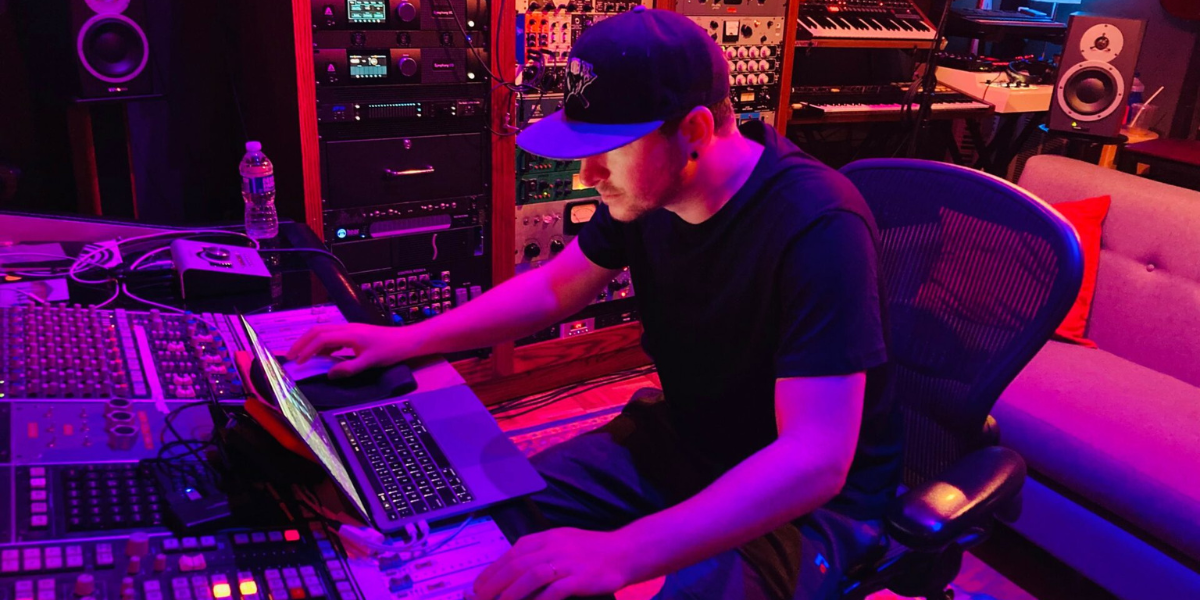
The room can change from song to song. One day, it may hold a first-time artist standing near a microphone, unsure whether the idea in their head can survive the pressure of being recorded. Another day, it may hold an established performer chasing the final detail that turns a strong track into something unforgettable. For Maks Gabriel, producer-composer, those moments carry the same responsibility: listen first, find the emotional center, then build around it with precision.
That approach has become the quiet force behind Maks Gabriel, a Canadian-American music producer, composer, and songwriter whose career stretches from classical piano training in Montreal to Nashville writing rooms, chart-minded pop sessions, rock collaborations, and music placed in major television series. His work has touched artists across genres and career stages, yet the guiding principle has stayed steady. “Every artist, songwriter, and producer has to bring something unique to the table, something that genuinely elevates a song, a performance, or a creative vision,” he says. “Recognition comes as a result of consistently creating that value.”
A Rare Musical Lineage
Maksim Gabriel Knecht, known professionally as Maks Gabriel, is a Canadian-American producer, composer, and songwriter. His story begins at the piano. From 1991 to 2002, he trained at McGill University’s Conservatory of Music in Montreal, studying under the renowned Russian concert pianist Marina Goglidze-Mdivani.
That name matters. Goglidze-Mdivani was a distinguished student of Emil Gilels, and Gilels was personally recognized by Sergei Rachmaninoff as his pianistic successor. This places Maks within a rare and remarkable artistic lineage. More than a point of pride, it is a foundation. Over a decade of classical discipline gave him a command of theory, emotion, and performance that continues to inform his work today.
Few producers arrive at the console with that kind of grounding. For Maks, it is not decoration. It is the reason he can move fluidly between genres while never losing the emotional core of a song.
From Pop Success To A Wider Nashville Sound
Success in one lane can be useful, but it can also become a trap. Gabriel’s move toward Nashville opened a broader field. Instead of limiting himself to the pop world, he stepped into rooms with country artists, rock musicians, metal players, alternative voices, and hit songwriters who approached music from different angles. The change demanded range. It also confirmed one of his strongest differentiators: adaptability without dilution.
In Nashville, Gabriel has worked with artists and writers connected to many corners of modern music, including “American Idol” winner Trent Harmon, Radney Foster, Muscadine Bloodline, Svrcina, Honey County, Eric Paslay, CB30, Spencer Crandall, Runaway June, Megan Moroney, Chiquis Rivera, and Cassadee Pope. His collaborations have also extended to members of major rock bands such as 3 Doors Down, Sevendust, A Perfect Circle, Breaking Benjamin, and Limp Bizkit. For a producer, those rooms require more than genre vocabulary. They require emotional translation.
That is where Maks Gabriel, producer-composer, stands apart. He does not treat production as a stamp to press onto every artist. Instead, he treats each project as an act of discovery. A country vocal may need air and ache. A rock track may need weight, urgency, and space. A pop song may depend on a hook that feels effortless but is engineered with care. A cinematic cue may require restraint, because the image must breathe. Gabriel’s job is to recognize what the moment needs and remove what it does not.
“Whether I am producing an established artist or helping someone record their very first song, my goal is to understand their vision and bring experience, creativity, and attention to detail that helps them create something they are truly proud of,” he says. That sentence reveals the core of his studio philosophy. The artist does not disappear into the production. The production exists to make the artist clearer.
This matters because listeners can sense when a song has been overworked. They may not know the technical reason, but they can feel when a vocal has lost its honesty or when a track tries too hard to impress. Gabriel’s classical roots give him the tools to understand complexity, but his professional maturity helps him resist using complexity for its own sake. The better goal is impact. The better result is a song that feels inevitable.
Maks Gabriel Producer-Composer For Screens And Songs
Gabriel’s growing work in television and film has added another dimension to his career. Songwriting for artists often begins with voice, identity, and audience. Writing for screen begins with story, character, tension, and timing. For Maks Gabriel, producer-composer, the two worlds are connected by emotion. A great song can deepen a scene. A strong cue can reveal what dialogue leaves unsaid.
His songs have been placed in series including Yellowstone, CMT’s Nashville, Roswell, New Mexico, Legacies, True Blood, The Mindy Project, and Containment. Those placements reflect a skill set that goes beyond making polished tracks. Music for screen must create atmosphere quickly. It must have shape, restraint, and emotional accuracy. If it distracts from the story, it fails. If it supports the story so well that the viewer feels more than they expected, it succeeds.
Gabriel’s interest in film and television also fits his wider view of production as service. Whether he is working with an artist, a music supervisor, or a filmmaker, the central question stays the same: what does the story need? That question can lead to a piano line, a vocal texture, a heavy guitar movement, a pop chorus, or a sparse cinematic bed. The genre changes. The responsibility does not.
Today, Maks Gabriel continues building a catalog that reflects both craft and range. His work spans pop, country, rock, alternative music, and music for screen, but the through line is not genre. It is trust. Artists trust him to honor their voice. Collaborators trust him to bring taste and structure. Supervisors trust music that can support visual storytelling. In an industry often driven by noise, that kind of trust is a competitive advantage.
There is also a human lesson in Gabriel’s path. His career shows that versatility is not the same as being unfocused. In the right hands, versatility is evidence of depth. It means a creator can enter different musical worlds without losing the discipline, sensitivity, and purpose that define the work. Gabriel’s classical training, pop success, Nashville evolution, and screen placements are not separate stories. They are chapters in one career built on listening, adapting, and adding real value.
For artists, writers, and filmmakers seeking a collaborator who can bring musical intelligence without overpowering the vision, Maks Gabriel offers a rare combination: formal training, commercial experience, cinematic instinct, and a producer’s respect for the person behind the song. Those interested are welcome to explore his work, study the range, and consider what their next project could become with the right creative partner in the room.
Explore More About Maks Gabriel
Connect with Maks Gabriel, Instagram, and Facebook.