
Beyond the Singing Lesson: The Untapped Power of the Human Voice.

We have been taught to think of singing as something we are either good or bad at. But what if we have profoundly underestimated the power of the human voice?
“I can’t sing.”
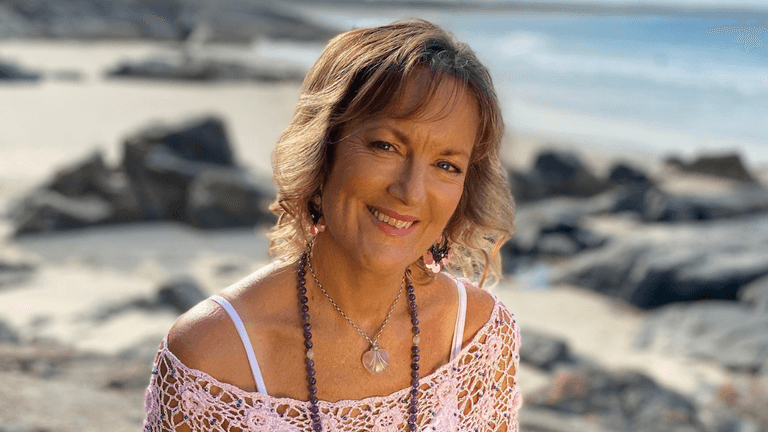
It is one of the most common things Julia Williamson hears.
Somewhere along the way, millions of people have decided that singing belongs to people with beautiful voices, perfect pitch or enough confidence to perform in front of others.
But what if singing was never just about sounding good?
What if the voice could become a powerful instrument for changing how we feel, interrupting patterns from our past and consciously shaping how we experience life?
This question sits at the heart of Williamson’s Sing to Thrive Method, which brings together somatic singing, voice activation, conscious language, visualisation, breath, movement, sound and intention.
Her philosophy is deceptively simple.
“We do not have to think our way into transformation,” Julia says. “We can sing our way into it.”
We Are Always Rehearsing Something
Our experiences do not simply disappear. Traumatic and emotionally significant experiences can become connected to stories, beliefs, emotions, images and physiological responses. Long after an experience has passed, something in the present can activate an old response.
We may consciously know that we are safe, yet our body reacts as though the past is happening again.
We may want to be seen, yet continually make ourselves smaller.
We may desire love, abundance or freedom while unconsciously repeating beliefs that tell us they are unavailable to us.
Williamson believes the voice offers us another possibility.
Rather than only analysing the patterns we want to change, her work invites people to create something new.
A new word.
A new sound.
A new image.
A new feeling.
A new possibility.
We don't just think about it.
We sing it.
When Sound Becomes Visible
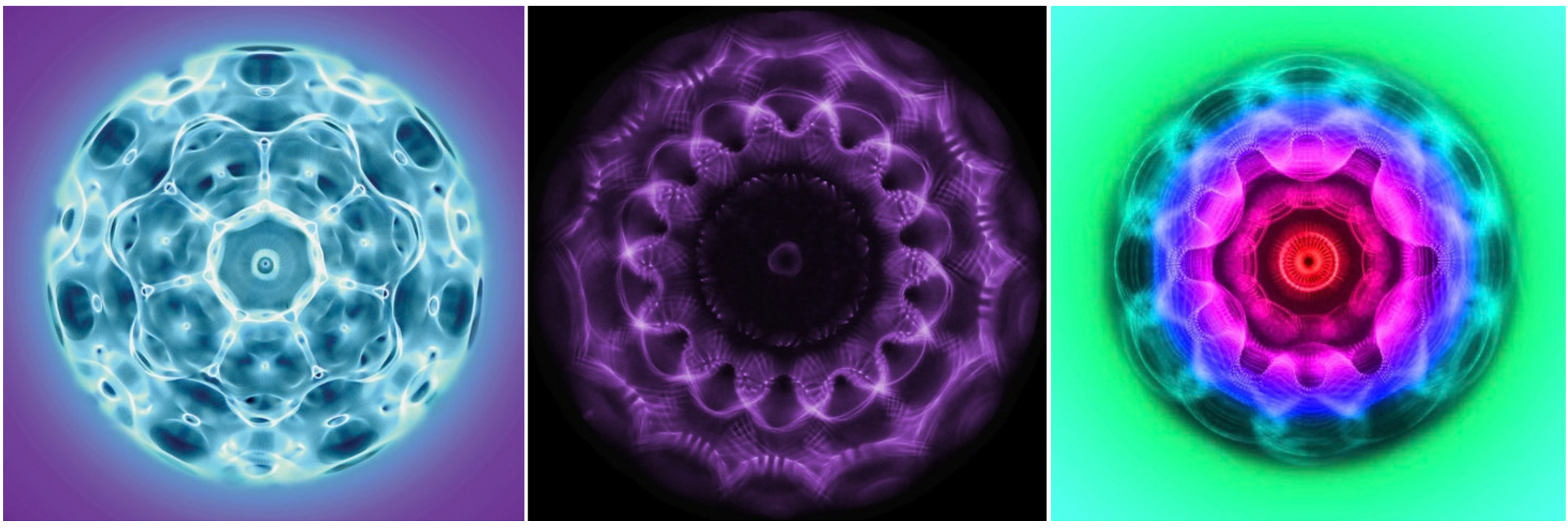
Photo Credit: John Stuart Reid
Sound is vibration. And cymatics gives us an extraordinary opportunity to actually see what sound can do.
Acoustic-physics researcher John Stuart Reid, whom Williamson has interviewed for the Sing to Thrive podcast, has spent decades exploring cymatics, the study of visible sound. Reid developed the CymaScope, an instrument that makes sound visible by revealing the intricate patterns created when sound interacts with water.
Sound is vibration moving through matter, creating patterns that can be harmonious or discordant. Music affects us through rhythm, frequency, resonance and vibration, whether we consciously direct the experience or not.
When we sing, we generate sound from within. Breath becomes sound. The body resonates. And when we consciously combine that sound with words, melody, emotion and intention, we begin to take an active role in the patterns we are creating and reinforcing within ourselves.
Julia likens it to discovering that life is a video game and realising the controls have been in our hands all along. We have always been influencing our inner world through what we think, speak, sing, feel and repeatedly focus upon. The difference is becoming conscious of it.
The words matter.
The sound matters.
The intention matters.
And the person creating them is not merely listening to the experience.
They are physically participating in it.
What Are We Repeatedly Telling Ourselves?
Most of us would never deliberately repeat a negative affirmation hundreds of times a day, yet unconsciously, we often do.
I'm not good enough.
I can't do that.
It's too late for me.
I'm not safe.
Nobody wants to hear me.
These statements can become so familiar that we stop recognising them as beliefs and experience them as truth.
Williamson's original healing music deliberately turns that process around.
Rather than singing lyrics that reinforce heartbreak, loss or limitation, she writes songs and mantras using intentional language designed to focus attention on qualities such as freedom, peace, courage, love, abundance and possibility.
But language is only one layer.
The melody carries it.
The breath embodies it.
The voice vibrates it.
Emotion gives it meaning.
Repetition reinforces it.
This is where neuroplasticity becomes part of the conversation. The brain changes in response to experience and repeated activity, while research into singing and musical training continues to demonstrate adaptations across auditory, motor and somatosensory networks.
The question then becomes: what do we want to practise?
Giving the Brain a New Picture
There is another element of Sing to Thrive that Julia considers fundamental: imagery.
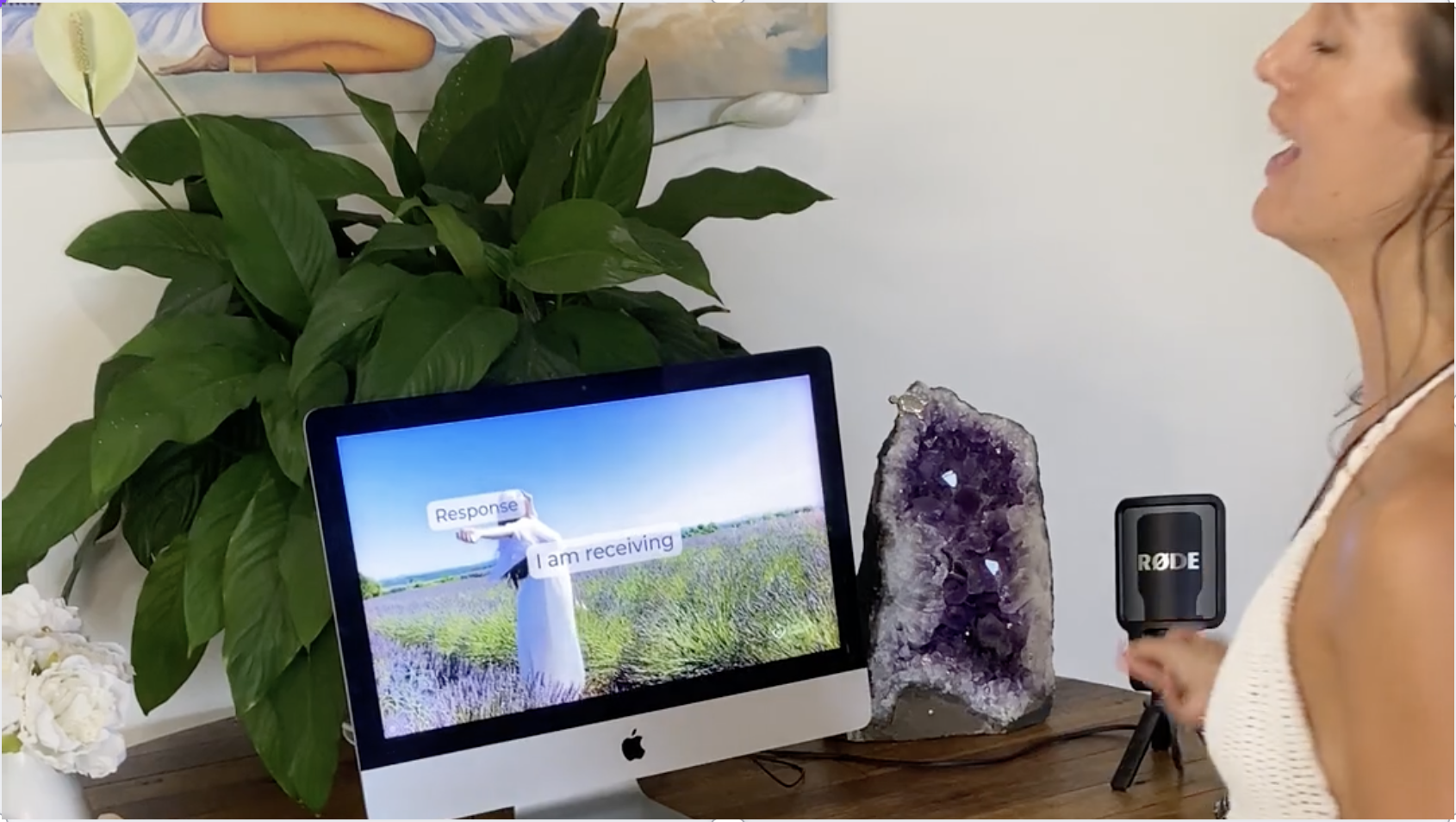
Across many of her Karaoke for the Soul and Vocal Vision meditations, original music is woven with moving images of the natural world and animal kingdom, including oceans, forests, mountains and birds in flight, associated with beauty, freedom, strength, connection and possibility.
They are not simply beautiful backgrounds.
They are part of the experience.
The brain's systems for imagining and perceiving the world are deeply interconnected. Neuroscience has demonstrated substantial overlap between neural processing involved in visual imagery and visual perception.
An image can change how we feel even when what we see is not physically happening to us.
Imagine standing at the edge of a vast ocean.
Picture yourself soaring above a landscape.
Remember the face of someone you deeply love.
The experience may be imagined, yet the emotions can be real.
Williamson intentionally brings these elements together so that someone may be singing freedom while seeing freedom, hearing freedom, imagining freedom and beginning to feel freedom in their body.
Instead of continually feeding the nervous system images associated with the past, we can begin introducing images of possibility.
“We are creating a new experience on multiple levels at once,” Julia explains. “You are not just saying different words. You are singing them, seeing them, feeling them and giving your whole system an opportunity to experience something new.”
From Neuroplasticity to Conscious Creation
This is where Williamson's work moves beyond healing.
For many people, personal transformation begins with the past: understanding what happened, recognising the patterns it created and releasing what no longer serves them.
That work can be life-changing.
But Williamson believes there comes a point when another question becomes equally important:
What do you want to create now?
If our brains and bodies have learned from repeated experiences of fear, rejection, shame or limitation, can we deliberately begin rehearsing different experiences?
What does confidence feel like?
What does freedom sound like?
What happens when we repeatedly give our attention to possibility rather than limitation?
This is the territory where science and soul meet in Williamson's work.
Our understanding of epigenetics has also challenged the idea that biology is unchangeable; gene activity interacts with biological and environmental conditions.
For Williamson, these discoveries point toward a larger truth: we are not powerless passengers in our own lives.
We participate.
From Healing Trauma to Creating an Extraordinary Life
Williamson knows the power of that idea personally.
Her own childhood experiences of emotional suppression and sexual abuse created patterns of shame, fear and self-silencing that followed her into adulthood. Her journey began with healing those wounds and became something much bigger.
She realised she did not want her life defined by what had happened to her.
She wanted to discover what she could create beyond it.
That distinction now sits at the heart of Sing to Thrive.
Healing is not the destination.
It creates space for something new.
Instead of asking only, “What do I need to heal?” Williamson encourages people to eventually ask, “Who am I becoming?”
The voice becomes a bridge between those two questions.
Becoming a Conscious Co-Creator
For Williamson, conscious creation is not about pretending difficult things do not happen or waiting for life to change after singing a few positive words.
It is about becoming conscious of what we give our attention, language, emotion and energy to, and recognising that we choose what we practise.
We can continue rehearsing an old identity.
Or we can begin embodying a new one.
This is why Sing to Thrive combines so many elements at once: sound, vibration, intentional language, melody, breath, emotion, movement, imagery, repetition and conscious intention.
Together, they create an experience beyond intellectual understanding.
“We have far more power than we realise,” Julia says. “Our past may have shaped us, but it doesn't have to define what comes next. We can heal, we can change, and we can consciously participate in creating an incredible life.”
Perhaps that is the real invitation of the human voice.
Not simply to sing beautifully.
But to become fully expressed.
To give sound to what we choose to believe.
To rehearse possibility instead of limitation.
And ultimately, to become a conscious co-creator of the life we are here to live.
Begin With Your Own Voice
You don't need to consider yourself a singer to begin.
Through Sing to Thrive, Williamson offers voice activations, Vocal Vision experiences, Rewire for Joy, somatic singing practices and other programs designed to help people experience their voice differently.
The Free Your Voice Starter Journey offers an introduction to the method, while Sing to Thrive Hub brings together transformational voice practices, music and live experiences for people around the world.
Because perhaps the question was never:
Can I sing?
Perhaps the more interesting question is:
What could change if I began using my voice?
Explore More About Sing to Thrive
Connect with Sing to Thrive, YouTube, Facebook, and Instagram.

Musicians Today Contributor
This article features partner, contributor, or branded content from a third party. Members of the Musicians Today editorial staff were not involved in the creation of this content. All views and opinions are those of the contributor alone.