
Foo Fighters and Los Angeles Philharmonic Join Forces at Hollywood Bowl

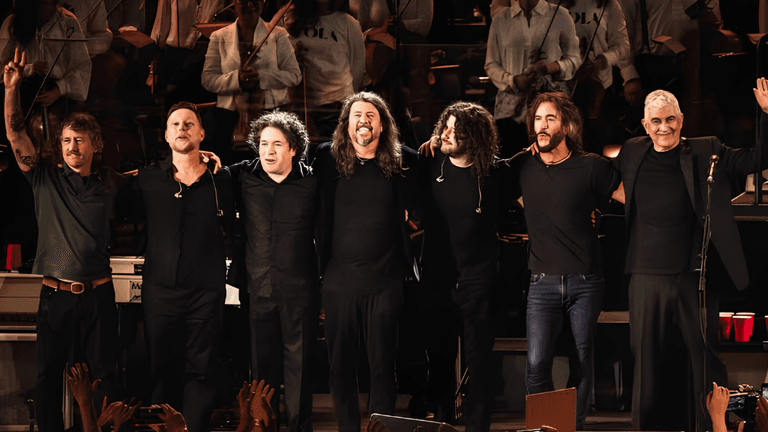
The Foo Fighters joined the Los Angeles Philharmonic for a major concert at the Hollywood Bowl on Saturday, bringing together one of rock music's best-known bands and one of America's most prominent orchestras.
The performance, presented as part of a special Hollywood Bowl event, combined the band's rock repertoire with orchestral accompaniment under the direction of conductor Gustavo Dudamel.
The concert was one of several major music events taking place across Los Angeles during a busy summer weekend, but the collaboration stood out because of the scale of the performers involved.
The Hollywood Bowl has hosted major musicians and orchestras for decades, making it a natural setting for a performance that crossed the boundaries between rock and classical music.
The Foo Fighters have spent decades as one of the leading American rock bands, while the Los Angeles Philharmonic has built an international reputation for orchestral performances across classical and contemporary music.
Bringing the two groups together required a different approach from a conventional rock concert.
Rock songs performed with an orchestra require extensive arrangements that allow strings, brass, woodwinds and other orchestral instruments to complement the band's guitars, bass and drums.
The resulting sound can be substantially different from a standard concert arrangement.
For the musicians involved, such performances also require close coordination. Rock bands typically operate around a strong rhythm section and amplified instruments, while orchestras rely on a conductor to coordinate dozens of musicians.
The combination requires both groups to maintain precise timing and dynamics.
The concert also highlighted the continuing evolution of live music programming. Major orchestras increasingly collaborate with artists from popular music, while established rock performers have embraced orchestral arrangements for special performances.
Those collaborations can introduce audiences to musical styles they might not ordinarily experience.
The Hollywood Bowl provides an especially distinctive environment for that type of event. Its outdoor setting allows large audiences to experience concerts under the evening sky while accommodating productions that require substantial staging and sound systems.
The Foo Fighters' appearance also brought a major touring rock act into a venue strongly associated with the Los Angeles Philharmonic.
The event was connected with a program celebrating Dudamel and his work in Los Angeles. The conductor has become a major figure in the city's cultural life, and his leadership has included efforts to connect orchestral music with broader audiences.
The collaboration therefore brought together several strands of Los Angeles' music culture: rock, classical performance and large-scale outdoor concerts.
The event also demonstrated the continuing importance of live music as a shared experience. Streaming services have transformed how audiences listen to recorded music, but concerts remain one of the few places where large groups can experience a performance simultaneously.
Special collaborations can make those experiences particularly memorable because they are difficult to reproduce exactly in a recording.
For the musicians, the performance offered an opportunity to reinterpret established material in a different musical setting.
For the audience, familiar songs could be presented with a much larger instrumental palette.
The orchestral setting can add depth and complexity to rock arrangements, while the presence of a rock band can bring a different energy to an orchestra's traditional concert environment.
The concert also formed part of a broader summer music calendar in Los Angeles that included festivals, touring artists and performances at venues throughout the city.
Los Angeles remains one of the most important live-music markets in the United States, supporting a wide range of genres and performance formats.
The Foo Fighters and Los Angeles Philharmonic collaboration reflected that diversity.
Rather than separating rock and classical audiences, the event created a shared setting in which both musical traditions could operate together.
Such performances have become increasingly common as artists look for ways to expand their live shows and orchestras seek new audiences.
The success of these collaborations depends on more than simply adding orchestral musicians to a rock stage. Arrangements must be carefully developed so that the orchestra supports the band's sound without overwhelming it.
The result can create a new interpretation of songs that audiences already know.
Saturday's performance at the Hollywood Bowl therefore represented more than another concert on a busy Los Angeles calendar. It was an example of how major artists and institutions can cross musical boundaries to create a different type of live performance.
The combination of Foo Fighters, the Los Angeles Philharmonic and Dudamel placed rock and orchestral music on the same stage at one of America's most recognizable outdoor venues.
For the musicians and audience alike, the evening demonstrated the continuing possibilities of collaboration in live music.

Musicians Today Contributor
This article features partner, contributor, or branded content from a third party. Members of the Musicians Today editorial staff were not involved in the creation of this content. All views and opinions are those of the contributor alone.