


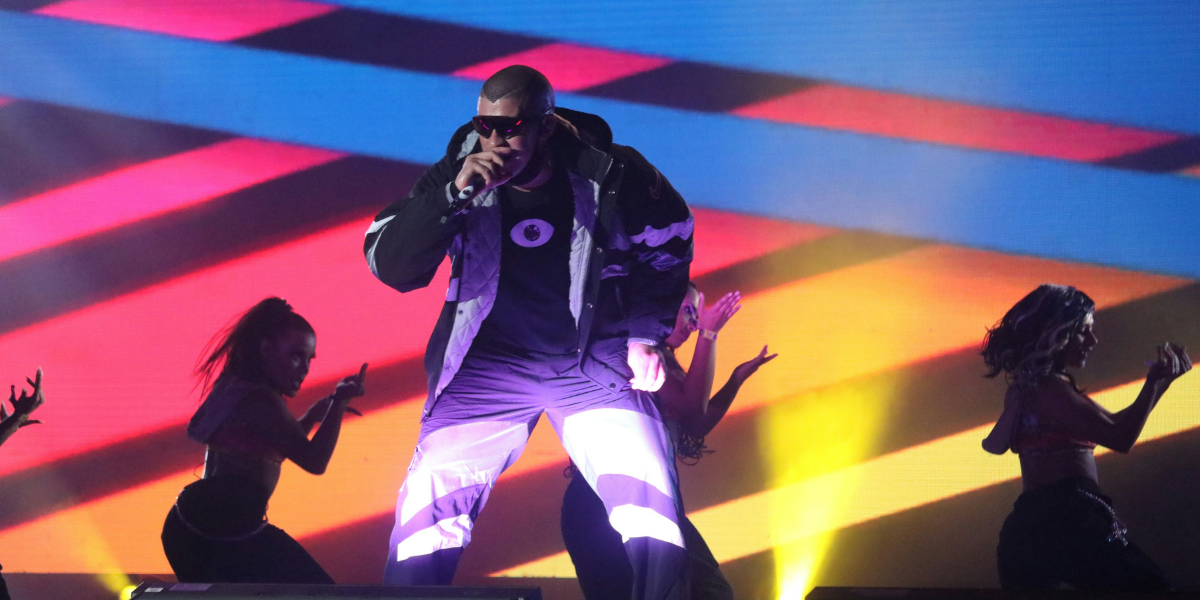
On February 8, 2026, the United States witnessed a landmark moment in music and cultural celebration as Puerto Rican superstar Bad Bunny headlined the Super Bowl LX halftime show at Levi’s Stadium in Santa Clara, California. What unfolded was more than just a performance, it became one of the most talked‑about musical showcases of the year due to its cultural resonance, artistic ambition, and significant representation on one of the world’s largest live broadcast stages.
As the National Football League’s championship game, the Super Bowl, unfolded, millions of Americans and global viewers tuned in not just for the sport but for the music. The halftime performance, officially produced under the Apple Music Super Bowl LX Halftime Show, marked a first in several respects: Bad Bunny became the first Latino solo artist to headline the Super Bowl halftime show and delivered a set performed predominantly in Spanish, an unprecedented move on this massive American entertainment platform.
A Performance Rooted in Culture and Identity
Bad Bunny’s show was a vibrant tribute to his Puerto Rican roots and broader Latin culture. The production incorporated a fusion of music, dance, and visual storytelling that honored cultural heritage and showcased Latin rhythms on a stage watched by audiences in the United States and around the world. The performance featured special guest appearances from artists including Lady Gaga and Ricky Martin, enhancing the spectacle and bringing together musicians from different backgrounds to celebrate musical diversity.
Notably, this halftime show stood out from previous ones not just for its music but for its bold representation: performing almost entirely in Spanish on one of the biggest platforms in American entertainment challenged traditional norms and elevated Latin music’s visibility. This moment resonated deeply within a music industry increasingly focused on global audiences and diverse voices.
Cultural Impact Beyond the Game
While the Super Bowl remains primarily a sporting event, the halftime show often becomes an equally significant cultural moment, shaping conversations in music and entertainment. Bad Bunny’s performance did just that, sparking widespread discussion of representation and inclusivity in mainstream U.S. media. Many fans and commentators praised the show for bringing Latin music culture to the forefront of the American entertainment landscape, and for pushing boundaries in how music can reflect broader cultural narratives.
This has particular resonance given the Super Bowl’s massive viewership. Hundreds of millions of people regularly watch the event, making the halftime show one of the most visible stages available to performers. By centering a Spanish‑language set with Latin rhythms, Bad Bunny not only celebrated his own heritage but also spotlighted a musical tradition that continues to grow in influence in the U.S. music scene.
Reception and Public Response
The public and critical response to the halftime show was largely celebratory. Fans expressed excitement across social media and in press coverage, highlighting not only the high energy of the performance but also its cultural significance. The inclusion of well‑known guest artists such as Lady Gaga and Ricky Martin added further appeal, bridging mainstream pop and Latin music audiences.
Critics also noted the performance’s ability to blend entertainment with cultural pride, a combination that strengthened Bad Bunny’s reputation as an artist capable of delivering powerful artistic statements on a global scale. This performance reaffirmed his place in contemporary music and helped illustrate the evolving nature of cross‑cultural influences in the U.S. music industry.
Broader Significance for the Music Community
For musicians, industry insiders, and music lovers alike, Bad Bunny’s Super Bowl halftime show represents a significant milestone. It signals an increasing openness within mainstream American platforms to showcase artists who bring diverse voices and sounds. Such moments can influence trends in music marketing, audience expectations, and the kinds of artists major platforms choose to spotlight.
Furthermore, this event may inspire emerging artists from underrepresented communities to pursue and normalize participation in major cultural events. The stage that Bad Bunny commanded at the Super Bowl, one of the largest annual music performance platforms, highlighted the power of music to unite audiences across cultural and linguistic lines.
Looking Ahead
The ripple effects of this halftime show are likely to continue throughout 2026. In a year marked by numerous music festivals, concerts, and artist tours across the United States, Bad Bunny’s performance sets a tone for cultural celebration and artistic authenticity in mainstream live entertainment. From the growth of Latin music’s audience to its influence on major live events, the Super Bowl LX halftime show will be remembered as a defining musical moment of the year.
Key Takeaways:
- Bad Bunny made history as the first Latino solo artist to headline the Super Bowl halftime show, performing largely in Spanish.
- The performance emphasized cultural pride and showcased Latin music on one of television’s most‑watched stages.
- Guest appearances from Lady Gaga and Ricky Martin highlighted collaborative diversity in mainstream music.
- The event underscores the expanding influence of diverse musical genres within major U.S. cultural moments.
The Super Bowl LX halftime show will likely remain a reference point for how major entertainment events can celebrate cultural richness and musical innovation.